


Time Tracking in Belgium 2027: What Companies Need to Know Now

Table of Contents
- Legal Basis: CJEU Ruling and Belgian Employment Law
- An Overview of the Requirements Starting in 2027
- Which Companies Are Affected?
- More Than a Legal Obligation: Why Time Tracking Is Also an Opportunity
- Checklist: How to Prepare Your Company
- Frequently Asked Questions About Mandatory Time Tracking in Belgium
Introduction
For a long time, Belgium was one of the few EU countries without a legal obligation to systematically record working hours. That is changing: from January 1, 2027, companies in Belgium must document their employees’ working hours in a reliable, objective, and verifiable way.
The basis for this requirement is a 2019 ruling by the European Court of Justice (CJEU). The Belgian government has now set the implementation date, responding to European legislation and case law by making working time recording mandatory in order to comply with the requirements of the EU directive and the Court’s rulings.
For HR managers and business leaders, this means one thing: there is still time to prepare, but no time to waste. The upcoming changes are based on employment law and legislative requirements, which provide the legal framework for adapting working time recording practices.
In this article, we explain the background behind the new obligation, which companies are affected, what specific steps need to be taken, and how the right time tracking software can help you enter 2027 with confidence.

The Legal Foundation: CJEU Ruling and Belgian Employment Law
The origin of mandatory time tracking in Belgium does not lie in Brussels, but in Luxembourg. In 2019, the Court of Justice of the European Union ruled in Case C-55/18 that employers across the EU must implement an objective, reliable, and accessible system for recording daily working time.
The goal is to protect employees’ rights and ensure that working time regulations can be effectively enforced.
Since then, most EU member states have incorporated this ruling into national law, including Germany, Austria, Spain, and France. Belgium, however, remained an exception.
In Opinion No. 2462 of the National Labour Council, employee organizations once again strongly criticized the absence of a binding time tracking system. In response, the Belgian government anchored the obligation within the framework of the 2025–2029 labor market reform.
In addition, the EU Working Time Directive (2003/88/EC) sets minimum standards for daily and weekly rest periods, maximum working hours, and night work — requirements that simply cannot be monitored without complete and accurate time tracking.
What Applies From 2027: An Overview of the Requirements
At the time of writing, the final legal text for Belgium has not yet been published. However, based on the CJEU framework and comparable European regulations, it is already becoming clear what companies should expect: the general time tracking obligation in Belgium will require the daily recording of each employee’s working hours.
From January 1, 2027, working time recording will become a legal requirement for almost all employers in Belgium.
In future, companies will need to record not only the start, end, and breaks of working time, but also precisely document hours worked and the respective tasks performed. This helps manage processes efficiently and ensures compliance with legal requirements.
Modern time tracking systems provide a user-friendly solution that can be seamlessly integrated with planning software. With real-time insights and detailed dashboards for working time data, companies can optimize processes, improve resource planning, and ensure transparent, compliant working time management.
The system must be able to provide the following:
Objective time recording:
Employers in Belgium are already required to objectively record the start, end, and duration of daily working time, including breaks, overtime, and the hours actually worked.
Tamper-proof data storage:
The data must not be alterable retroactively.
Accessible:
During inspections by authorities or in the event of legal disputes, all records must be fully retrievable. Real-time insights also enable immediate verification and more efficient workforce management.
Cover all employees:
The obligation is expected to apply to almost all employees, including part-time workers and flexible working time models.
What is not required: a traditional punch clock is explicitly not mandatory. Companies can decide for themselves which system they use, as long as it meets the required standards.
Digital solutions via app, web, or terminal are just as acceptable as integrated HR software systems.
Retention requirements: Comparable EU regulations require working time records to be retained for at least five years — a similar requirement will likely be introduced in Belgium as well.
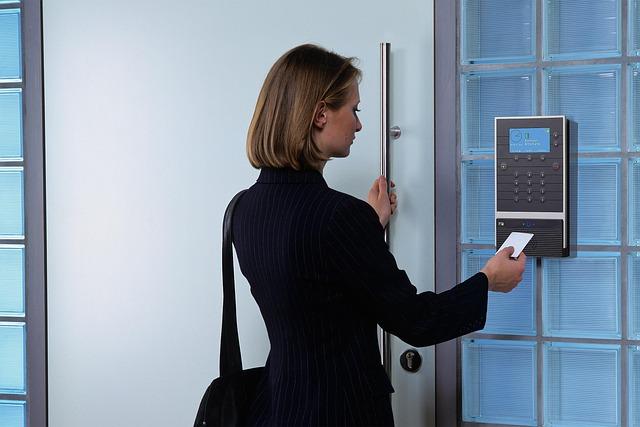
Time Tracking Methods: An Overview of Available Solutions and Technologies
The way companies record their employees’ working hours has evolved significantly in recent years. Modern time tracking systems now offer a wide range of options to ensure compliance with legal requirements and internal policies efficiently and transparently.
Manual time tracking is still common in many small businesses. In these cases, working hours are documented using timesheets, paper forms, or Excel spreadsheets. While this method is simple, it carries a high risk of errors and manipulation and quickly becomes difficult to manage as the number of employees or business locations grows.
Automatic time tracking relies on digital systems that automatically record the start, end, and breaks of working hours. These solutions offer a high level of accuracy and significantly reduce administrative effort. They are especially suitable for companies that require complete and tamper-proof documentation.
Mobile time tracking allows employees to record their working hours flexibly via smartphone or tablet — ideal for field service, construction, cleaning, and other industries with mobile teams.
The data is synchronized in real time and immediately available to management.
Biometric time tracking uses fingerprints, facial recognition, or other biometric identifiers to verify employees’ identities. These systems provide a high level of security and help prevent misuse, but they also involve higher implementation costs and stricter data protection requirements.
The underlying technologies are also evolving rapidly. Cloud-based time tracking systems allow companies to store and manage all working time data centrally and access it from anywhere — a major advantage for organizations with multiple locations or remote work policies.
Artificial intelligence (AI) can help automatically analyze working time data, detect irregularities, and optimize processes. The Internet of Things (IoT) opens up new possibilities by enabling sensors or connected devices to automatically record employee presence and activities.
For companies, selecting the right time tracking system should be aligned with their operational needs, company size, and applicable legal requirements.
Modern time tracking software not only ensures compliance with labor laws and time tracking obligations, but also provides valuable insights into workflows, employee productivity, and project performance — helping businesses manage teams and operations more efficiently.
Who Is Affected by the Obligation?
The new regulation applies to most employers in Belgium, regardless of company size or industry. Small and medium-sized enterprises (SMEs) are also affected.
Possible exemptions, for example for senior executives with a high degree of autonomy and responsibility, may be defined in the final legal text, which is still pending.
Mandatory time tracking is particularly relevant for sectors such as retail and hospitality, where it helps document working hours accurately, meet industry-specific requirements, and ensure legal compliance.
The new regulations also contribute to better working conditions and fairer employment practices by promoting transparency and balanced workforce management.
The new regulation is especially relevant for companies that previously relied on trust-based working hours without any formal documentation.
Trust-based working time models will generally remain possible, but the actual hours worked must still be recorded and traceable in the future.
Why This Is Also an Opportunity
Clearly, new obligations initially mean additional effort. But companies that treat the introduction of a digital time tracking solution as a pure compliance project are missing out on significant potential.
Concrete benefits for companies:
- Cost transparency: Companies that know exactly where working hours are being spent can plan more efficiently and manage budgets more effectively.
- Weniger Konfliktpotenzial: Klare, manipulationssichere Aufzeichnungen schützen Arbeitgeber und Arbeitnehmer gleichermaßen bei Streitigkeiten über geleistete Überstunden.
- Simplified payroll processing: Automated reporting reduces manual errors and saves valuable HR time.
- Insights into working time data: Modern time tracking solutions provide real-time visibility into recorded working time data via dashboards, enabling transparent, fast monitoring and efficient workforce management.
- Enable flexible working models with legal certainty: Especially in light of Belgium’s plans for “accordion working hours” and greater flexibility in labor regulations, reliable time tracking will become a fundamental requirement for modern working time models.
- Employer branding: Transparent and fair working time models strengthen employee trust and improve employer attractiveness.
How to Prepare Your Company: A Practical Checklist
January 1, 2027 may still sound far away — but it is not, considering that system selection, implementation, data migration, and employee training all take time.
Early integration of time tracking with existing planning software is particularly important to ensure efficient workforce planning and smooth operations. Our recommendation: start now, not in autumn 2026.
Step 1 – Analyze Your Current Setup
How are working hours currently recorded? Excel spreadsheets, paper-based timesheets, or not at all? Which systems are already in use, such as HR software or payroll systems?
Step 2 – Define Your Requirements
How many employees do you have? Are there shift schedules, field teams, or remote work arrangements? Do you need mobile time tracking via app? Which payroll integrations and software interfaces are required?
Step 3 – Choose the Right Solution
Look for legal compliance: objective, reliable, and accessible time recording, ease of use, data protection under GDPR, scalability, and integration with existing systems.
Step 4 – Involve Your Employees
Communicate early. Employees who understand the reasons behind the introduction of a new time tracking system are much more likely to accept the new processes.
Step 5 – Test and Roll Out
Start with a pilot in one department, collect feedback, make adjustments, and then roll out the solution company-wide.
How TimeTrack Helps You Stay Compliant
TimeTrack is an intuitive time tracking solution that already helps companies across the DACH region and beyond document working hours in compliance with labor regulations — while meeting all the requirements that are expected to apply in Belgium from 2027 onward.
- Legally compliant recording of start times, end times, working hours, breaks, and overtime.
- Tamper-proof data storage for legal certainty.
- Flexible time tracking via app, web terminal, or desktop.
- Automated reports for HR and payroll.
- Project time tracking for precise cost control.
Want to find out whether TimeTrack is the right solution for your business? Start your free 14-day trial today or contact our team for a personalized consultation.
An objective, reliable, and accessible system for recording daily working time is essential to effectively enforce maximum working hours and minimum rest periods, as established by the rulings of the Court of Justice.
Experts recommend starting the implementation of time tracking systems as early as 2026 to ensure compliance by the legal deadline. Due to ongoing labor market reforms, mobile apps and browser-based time tracking solutions are becoming the standard — including for remote and hybrid work environments.
An objective, reliable, and accessible system for recording daily working time is increasingly seen as a core requirement for modern workforce management and legal compliance.
The Future of Working Time: New Models and Greater Flexibility
The world of work is changing — and so is the way working hours are organized and recorded. Digitalization, new technologies, and the desire for a better work-life balance are leading companies and employees to adopt increasingly flexible working time models.
Flexible work is no longer just a trend: more and more companies allow employees to adapt their working hours to personal needs and operational requirements. Whether it is an early start, late working hours, or breaks taken as needed, time tracking remains the foundation for transparency and fairness.
Remote work and home office arrangements have become easy to implement thanks to digitalization and mobile time tracking systems. Employees can work from anywhere and record their working hours digitally without being tied to a fixed workplace.
Job sharing and flexible working hours offer additional ways to create more adaptable employment models. Two or more employees can share one position, or daily working hours can be chosen individually within a defined framework.
Here as well, accurate time tracking ensures transparency and fair compensation.
Innovative models such as the four-day workweek or the 30-hour week are becoming increasingly important. They give employees more time for rest and personal life, while companies benefit from motivated and productive teams.
The sabbatical model enables longer periods of leave for personal development or recovery. Here too, transparent recording of working hours and absences is essential.
These modern working time models offer numerous advantages: they increase employee satisfaction and retention, improve work-life balance, and make companies more attractive in the competition for talent.
However, successful implementation depends on companies and employees establishing clear rules and processes for time tracking and working time management together — supported by modern, flexible time tracking systems that meet all requirements for transparency, control, and legal compliance.
FAQ: Time Tracking in Belgium 2027
When will mandatory time tracking apply in Belgium?
Mandatory time tracking in Belgium is expected to come into effect on January 1, 2027. The final legal text has not yet been officially adopted.
Which companies in Belgium are affected by mandatory time tracking?
Most likely all employers in Belgium, regardless of industry or company size, including SMEs. Possible exemptions for specific employee groups will be defined in the final law.
Do I need to use a physical punch clock?
No. The law does not require a specific system. Digital solutions — via app, web, or terminal — are fully permitted as long as they are objective, reliable, and accessible.
What exactly must the time tracking system document?
At minimum: the start, end, and duration of working time per employee per day, including breaks and overtime.
How long must time tracking data be retained?
Under comparable EU regulations, time tracking records must generally be retained for at least five years. A similar requirement is expected in Belgium, although the final legal text is still pending.
What happens if companies fail to comply with the obligation?
Violations may result in fines and further sanctions imposed by the labor authorities. The exact penalty framework will be defined in Belgian law.
Does the obligation also apply to part-time employees and remote workers?
Yes, the obligation is expected to apply to all employees, regardless of their employment model or work location.
What about trust-based working hours — will they still be allowed?
Trust-based working time models will generally remain permitted. However, the actual hours worked must still be recorded and documented in a traceable manner in the future.
Why is Belgium introducing mandatory time tracking?
The basis is the 2019 CJEU ruling, which requires all EU member states to introduce a system for recording working time. The goal is to protect employee rights, enforce rest periods, and prevent the misuse of overtime.
How can I prepare my company now?
The best approach is to follow a clear roadmap: analyze your current setup, define your requirements, test a suitable solution, and implement it in time.
TimeTrack supports you with a simple, legally compliant time tracking platform designed for modern workforce management.
Note: This article is based on the information currently available as of May 2026. The final Belgian legal text has not yet been published. We recommend following the official announcements of the Belgian National Labour Council and the Belgian government. This article does not constitute legal advice.

Anja Bosiok ist Marketing Managerin bei TimeTrack und schreibt seit über drei Jahren über Zeitmanagement, moderne Arbeitswelt und digitale HR-Prozesse. Sie studierte Journalismus (Bachelor) sowie Publizistik- und Kommunikationswissenschaft (Magister) und verbindet redaktionelle Präzision mit tiefem Produktverständnis. Zuvor war sie als Content Managerin bei TimeTrack tätig und begleitet seitdem die Themen rund um Arbeitszeiterfassung und Personalorganisation – von der gesetzlichen Grundlage bis zur praktischen Umsetzung im Unternehmensalltag.
