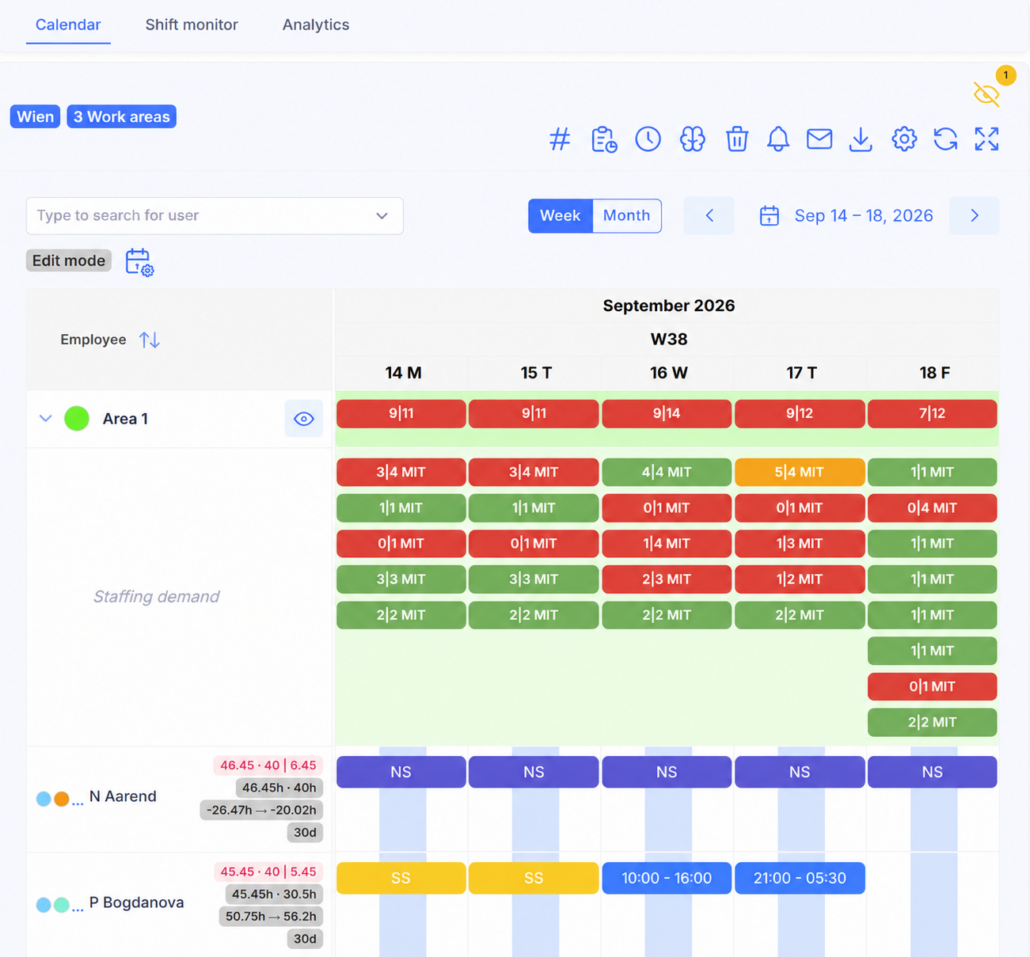
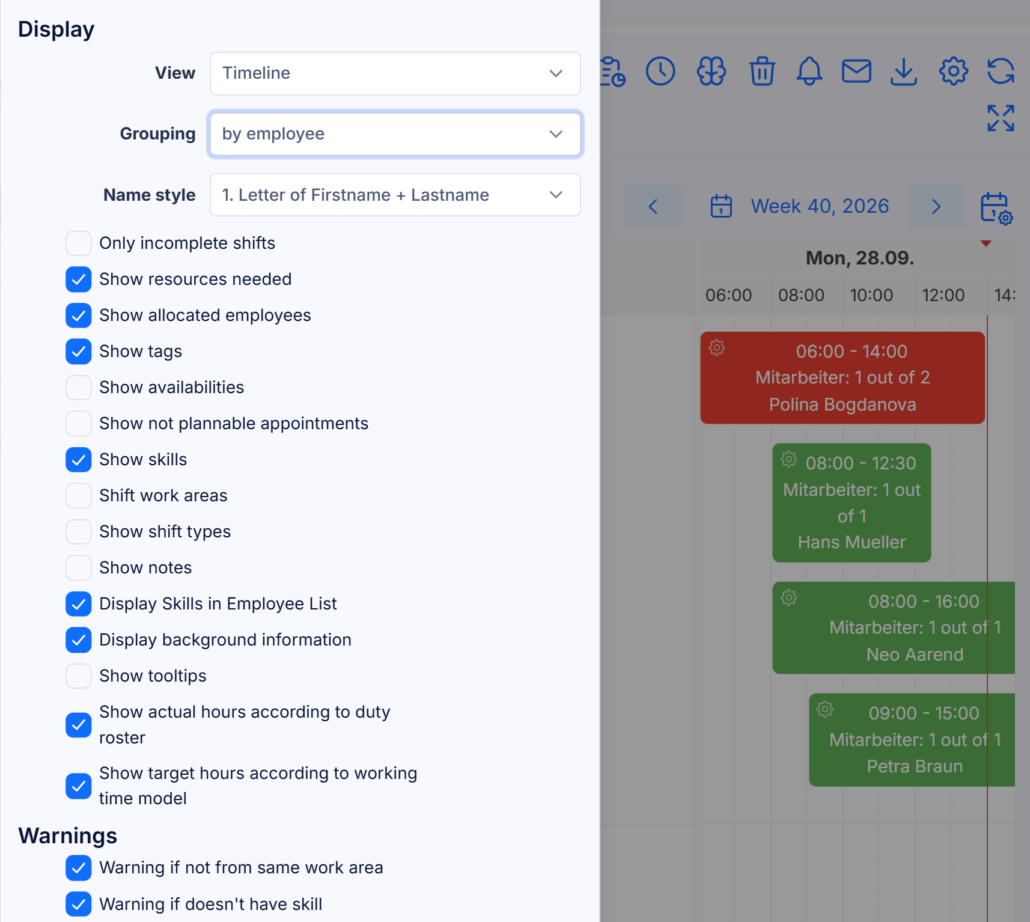
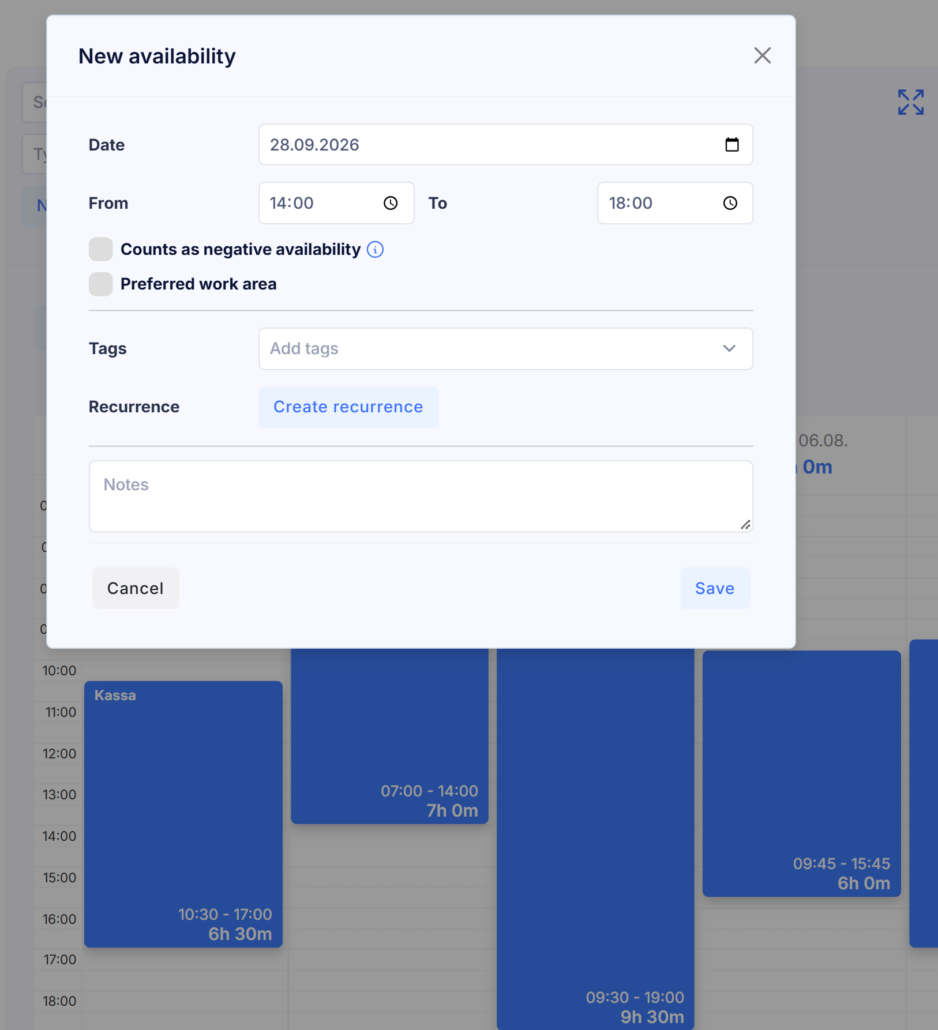
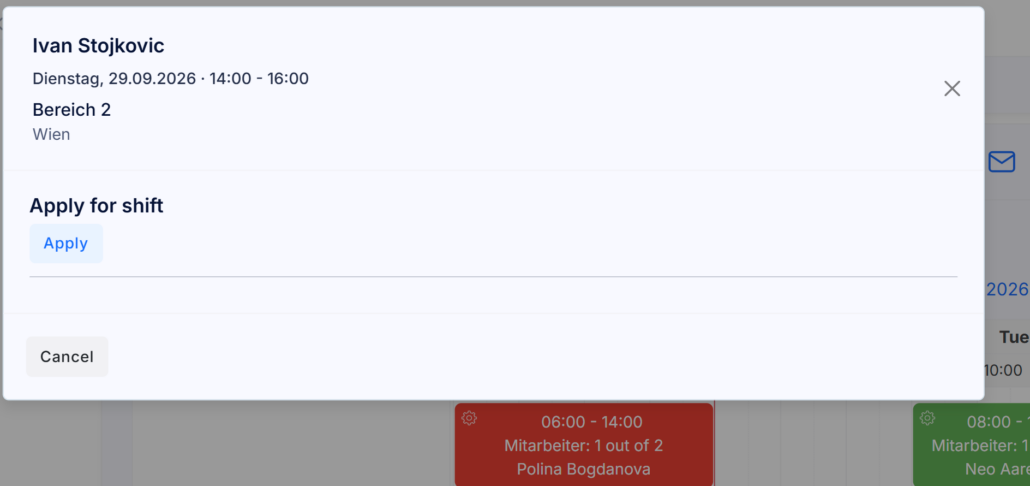
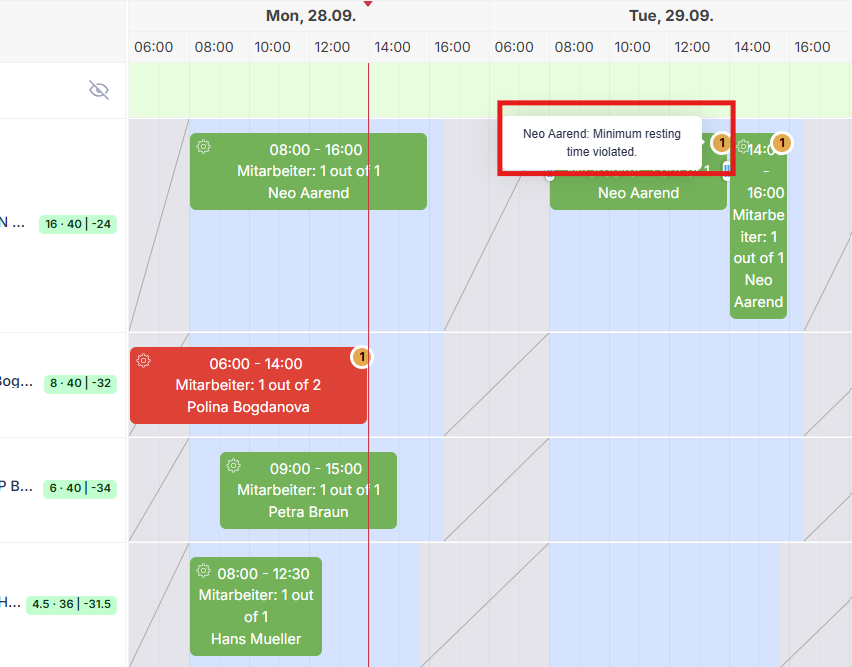
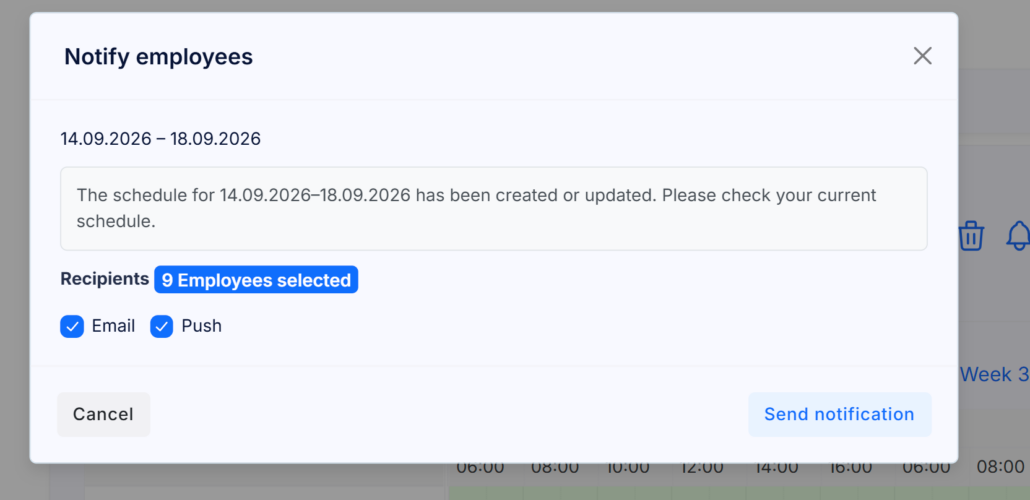
Once shifts and staffing requirements have been defined, TimeTrack can automatically assign employees to open shifts. The scheduling process matches suitable employees to available shifts in the background while taking into account a wide range of criteria that you can prioritize yourself, including approved and requested absences, daily, weekly, and monthly working hours, qualifications, eligible work areas, shift applications, employee availability, fair workload distribution, and permitted shift types.
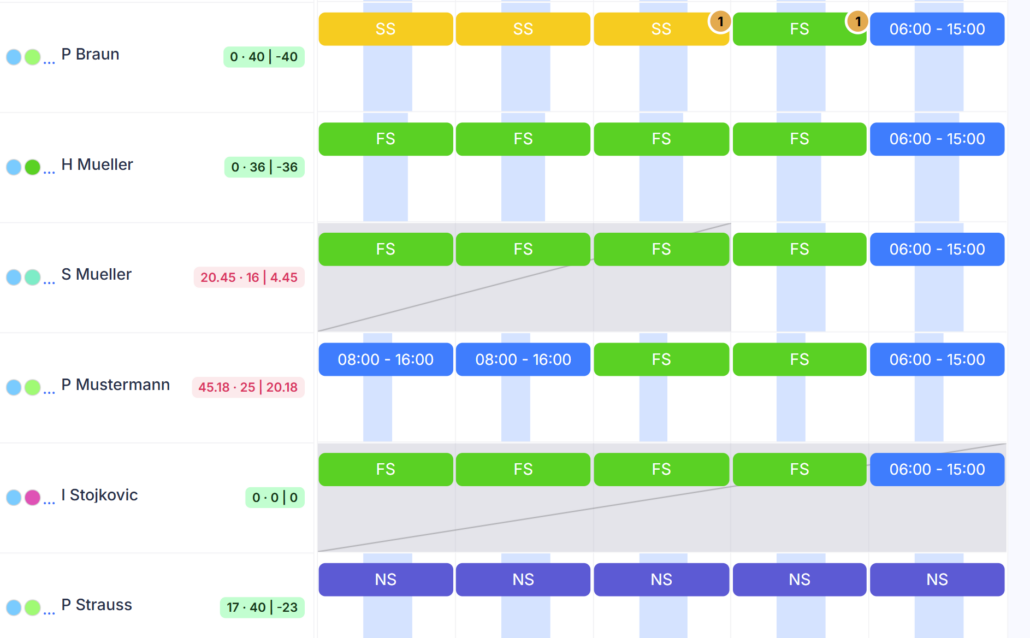
This means the automation does not operate as a rigid black box, but follows the scheduling logic of your organization. In healthcare, for example, qualifications and absences may be mandatory criteria, while the fair distribution of late shifts can be given a lower priority. The result appears as a regular employee schedule and can be adjusted using the same tools as a manually created schedule. Planners remain in control and only need to handle exceptions.
The shifts themselves are created from templates, shift patterns, working time models, or submitted availability. The automation then assigns employees to existing shifts. Revenue- or volume-based demand forecasting is intentionally not part of this process. Learn more about automated scheduling.


 Define staffing needs and required qualifications for each shift